
If you want a neighborhood where dinner, errands, transit, and weekend plans can all fit into a compact area, Downtown Sunnyvale stands out. For many buyers, the biggest question is not just what a home looks like, but what everyday life feels like once you move in. Around Downtown Sunnyvale, that daily rhythm centers on walkable streets, frequent community activity, and a housing mix that ranges from newer multi-family living to nearby heritage homes. Let’s dive in.
What defines Downtown Sunnyvale
Downtown Sunnyvale is a roughly 150-acre district bounded by the Caltrain tracks, Carroll Street and Bayview Avenue, Olive Avenue and El Camino Real, and Charles Street, according to the City of Sunnyvale’s downtown development overview. The area is a mixed-use downtown anchored by Historic Murphy Avenue, the CityLine and Town Center core, Plaza Del Sol, and Redwood Square.
That mix matters because it shapes how the area functions day to day. Instead of feeling like a single retail strip, downtown combines places to live, dine, gather, and commute from in one central pocket. If you are trying to picture daily life here, that compact layout is a big part of the appeal.
Murphy Avenue sets the tone
Historic Murphy Avenue is the clearest expression of Downtown Sunnyvale’s personality. The city describes it as a popular dining and entertainment destination, and Caltrain notes that the Sunnyvale station opens directly onto Murphy Avenue, reinforcing its role as a front door to downtown.
The street is also evolving. According to the city’s downtown development updates, Sunnyvale is converting the 100 block of Murphy Avenue into a pedestrian mall, and the segment between West Washington and West Evelyn remains closed to vehicles while the project is completed. That change supports more outdoor dining and creates a more public, pedestrian-oriented environment.
For you as a resident or future buyer, that means the area is being shaped around walking, gathering, and spending time outdoors, not just moving cars through. It is a practical quality-of-life feature that can make an everyday dinner run or coffee stop feel easier and more enjoyable.
Dining and errands in one place
One of the strongest advantages of living near Downtown Sunnyvale is convenience. The city says its historic downtown includes a variety of local eateries and merchants, while CityLine’s neighborhood overview highlights global cuisine, retail boutiques, and nearby anchors such as Whole Foods, Target, and AMC.
That kind of mix can simplify your routine. You may be able to combine groceries, casual dining, a movie, and smaller errands into one trip without covering much ground. For buyers who value a more connected daily lifestyle, that can be a meaningful difference.
Caltrain’s downtown guide also points to nearby cafes, a bookstore, a brewery, a wine bar, and Redwood Square as a public gathering space. Taken together, those uses suggest a neighborhood that stays active beyond standard business hours and offers a little more variety than a purely residential area.
Community events add energy
Downtown living is not only about what you can buy or where you can eat. It is also about whether the area feels alive and whether there are regular reasons to spend time outside your front door.
The City of Sunnyvale says downtown hosts frequent art festivals, concerts, and a year-round farmers’ market. That farmers’ market on Murphy Avenue is scheduled for Saturdays from 9 a.m. to 1 p.m., rain or shine, which gives residents a recurring weekend activity right in the core.
Redwood Square adds another layer of community use. CityLine event pages show the space supports rotating pop-up markets and festival formats, including makers’ market programming and summer events. In practical terms, that means downtown life can feel active even when you are not making a specific shopping trip.
Transit access is a major advantage
For many Silicon Valley buyers, commute flexibility is a key part of neighborhood fit. Downtown Sunnyvale has a strong transit-oriented profile, which can be especially helpful if you want options for getting around without depending entirely on a car.
The VTA Sunnyvale Transit Center information published by the city notes that the transit center offers bus connections throughout the city and sits across the street from the downtown Caltrain station. The station page also lists 439 parking spaces and 74 bicycle lockers, which supports different commuting styles.
Caltrain service through Sunnyvale runs across the day, reinforcing downtown’s appeal for people who want rail access built into their routine. Even if you do not commute daily, being close to regional transit can still add flexibility for work meetings, events, or visits up and down the Peninsula.
Parking still supports downtown use
Walkability and transit access are major benefits, but parking still matters. Whether you are meeting friends for dinner, running errands, or hosting visitors, easy access can affect how often you actually use downtown amenities.
The city publishes a downtown parking map that covers Murphy Avenue, Taaffe Street, and the CityLine area. That broader parking network helps support downtown activity without relying only on street frontage spaces.
For buyers comparing urban-style districts, this is a useful detail. A downtown can feel much more practical when it balances pedestrian energy with workable access for visitors and drivers.
Housing near the core
If you are considering a move near Downtown Sunnyvale, it helps to understand that the housing mix changes quickly as you move through the area. In the immediate core, the city’s downtown plan and current CityLine build-out point to a mostly multi-family and mixed-use environment.
The city notes that the larger downtown area includes office, residential, and commercial space, while CityLine’s current residences are apartment homes in studio through three-bedroom formats. Based on the downtown plan and project mix, buyers near Murphy Avenue are more likely to encounter apartments, townhomes, and other higher-density housing than detached houses right around the core.
That can be a strong fit if you want lower-maintenance living and close access to restaurants, transit, and events. It can also appeal to downsizers or busy professionals who value location and convenience over lot size.
Heritage streets nearby
A short distance from the denser downtown core, the housing character shifts. The Taaffe-Frances Heritage Neighborhood, located on the 500 blocks of Taaffe and Frances and the west side of Murphy Avenue, offers one of the clearest contrasts in the area.
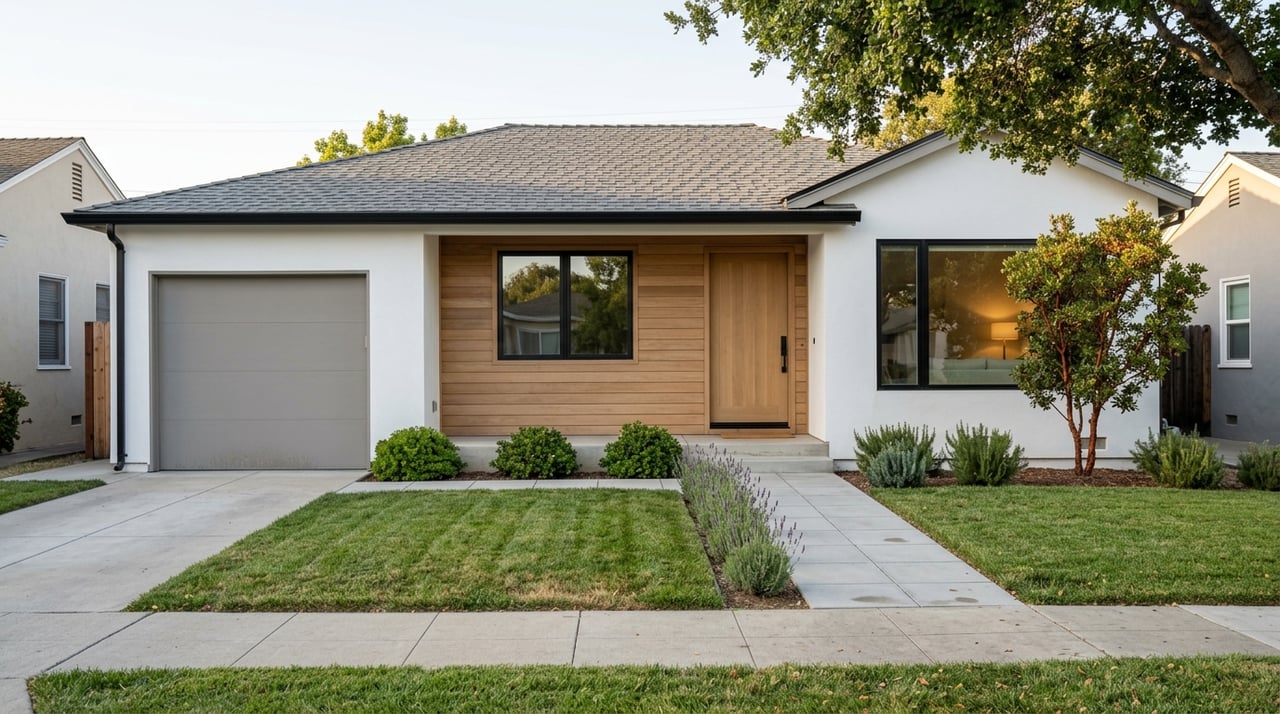
According to the city’s heritage neighborhood documentation, this neighborhood contains 59 single-family homes and two duplexes, generally on 6,500-square-foot lots. The city says these homes were built mainly in the 1920s through 1940s and feature bungalow and period-revival architecture, rear garages, sidewalk entries, narrow streets, large parkway strips, and a pedestrian-oriented layout.
For buyers, this creates an interesting choice. You can look near the core for a more modern, mixed-use lifestyle, or you can explore nearby heritage blocks for older single-family homes with a more established residential feel while still staying close to downtown amenities.
Who may enjoy living here
Downtown Sunnyvale can appeal to different types of buyers for different reasons. If you want to be close to transit, everyday errands, dining, and recurring public events, the area offers a level of convenience that is hard to ignore.
It may also suit you if you like having options. You can focus on newer apartment or townhome-style living near the center, or look just beyond the core for older single-family streets with distinct architectural character. That contrast is part of what makes the area worth a closer look.
As you think about fit, the key question is simple: do you want your daily routine to be more walkable, connected, and downtown-oriented? If the answer is yes, Downtown Sunnyvale offers a strong case.
Final thoughts on daily life
Everyday living around Downtown Sunnyvale is shaped by access and variety. You have Historic Murphy Avenue as a dining and gathering hub, CityLine and Redwood Square as mixed-use anchors, year-round events that bring people out regularly, and transit connections that support life beyond the neighborhood.
Just as important, the housing options nearby are not one-size-fits-all. The immediate downtown core leans more toward multi-family and mixed-use living, while nearby heritage streets introduce a very different residential setting. If you are weighing where to buy in Sunnyvale, understanding that lifestyle contrast can help you narrow your search with more confidence.
If you want help thinking through which Sunnyvale neighborhood best matches your day-to-day goals, connect with Lynn North for thoughtful, local guidance and a clear plan tailored to your move.
FAQs
What is Downtown Sunnyvale known for?
- Downtown Sunnyvale is known for Historic Murphy Avenue, a mixed-use layout, dining and entertainment options, community gathering spaces like Redwood Square, and direct access to Caltrain and VTA connections.
What is everyday life like near Murphy Avenue in Sunnyvale?
- Everyday life near Murphy Avenue can include walkable access to restaurants, cafes, shops, the farmers’ market, and recurring public events, with the area becoming even more pedestrian-focused through the city’s mall project.
Are there transit options in Downtown Sunnyvale?
- Yes. Downtown Sunnyvale includes the Caltrain station and the Sunnyvale Transit Center, which offers bus connections, parking spaces, and bicycle lockers.
What types of homes are near Downtown Sunnyvale?
- Near the downtown core, you are more likely to find apartments, townhomes, and other higher-density housing, while nearby areas such as the Taaffe-Frances Heritage Neighborhood include single-family homes and duplexes.
Does Downtown Sunnyvale have regular community events?
- Yes. The city highlights frequent art festivals, concerts, and a year-round Saturday farmers’ market, and Redwood Square also hosts rotating pop-up markets and festival-style events.