
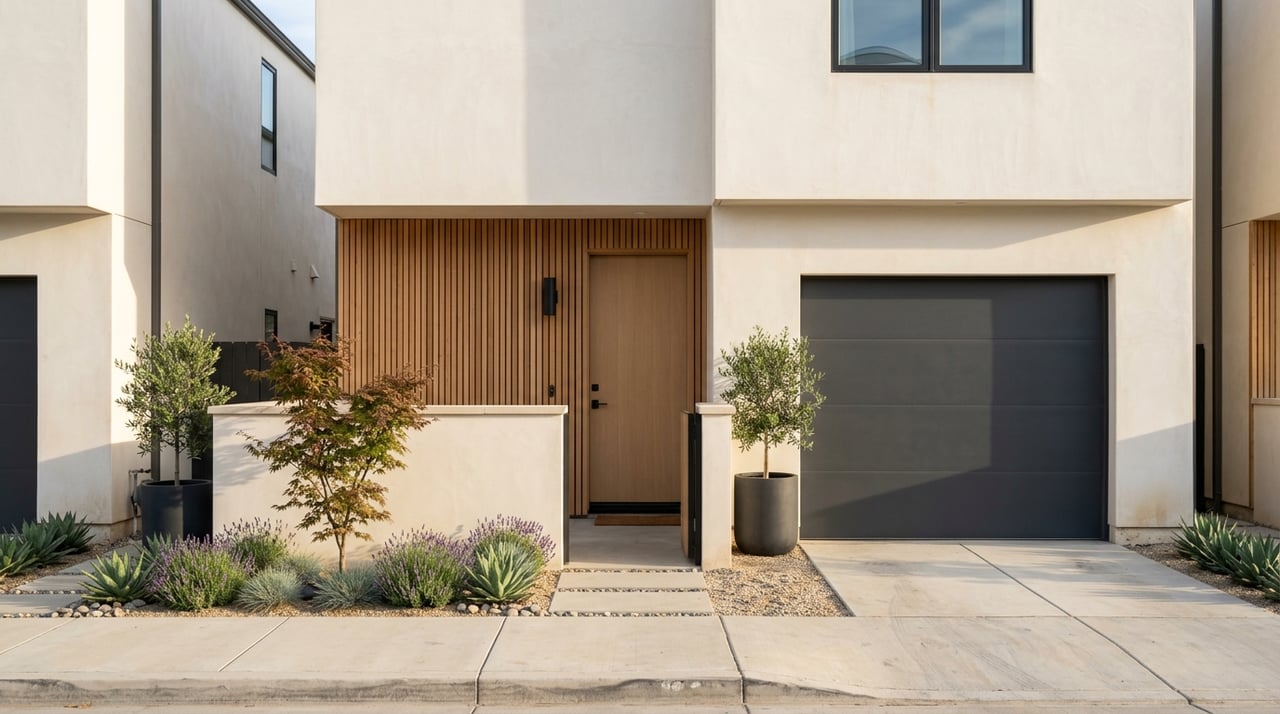
If you are deciding between a townhome and a single-family home in Mountain View, you are not just choosing a floor plan. You are choosing how you want to live day to day, how much maintenance you want to handle, and how far your budget can stretch in one of Silicon Valley’s most expensive markets. The good news is that both options can work well, depending on your priorities. Let’s break down what matters most in Mountain View so you can make a smarter, more confident choice.
Why this choice matters in Mountain View
Mountain View is a compact city of just over 12 square miles with more than 86,500 residents, a vibrant downtown around Castro Street, and major employment centers tied to companies like Google, LinkedIn, Intuit, and NASA Ames, according to the City of Mountain View. That local setup makes housing decisions feel very practical.
In many markets, the townhome versus single-family question is mostly about style. In Mountain View, it is often about commute time, walkability, lot size, privacy, and long-term flexibility. Because land is limited, what you buy affects not just your monthly payment, but also your daily routine.
Price gap in Mountain View
One of the biggest differences is cost. The city's FY 2025 ACFR reported a median sales price of $2.5 million for detached single-family residences for the quarter ended September 30, 2025, while Redfin's Mountain View townhome page showed a median listing price of $1.55 million for townhouses. That is a meaningful gap.
Broader citywide pricing gives helpful context, too, even if the numbers come from different timeframes. Zillow's Mountain View home value data put the average home value at $2,037,086, and homes were going pending in about 9 days. The takeaway is simple: both property types are expensive, but detached homes usually require a much higher budget.
What townhomes often offer
Townhomes in Mountain View can be a strong fit if you want lower-maintenance living without giving up too much space. Recent inventory commonly shows 3-bedroom layouts with 2.5 to 3.5 baths, about 1,535 to 1,591 square feet, attached 2-car garages, balconies, and sometimes a flex room or bedroom suite on the main level, based on recent Mountain View townhome listings.
Some communities also include shared amenities such as pools, spas, parks, or guest parking. That can add convenience, especially if you want usable space and a more lock-and-leave lifestyle. In some cases, end units are even marketed as feeling similar to single-family homes.
Best fit for townhome buyers
A townhome may make the most sense for you if you value:
- A lower entry price than a detached home
- Less exterior maintenance responsibility
- Proximity to transit, downtown, or employment centers
- Efficient layouts with updated features
- Community amenities and shared spaces
This option often appeals to busy professionals, relocation buyers, downsizers, and anyone who wants a more manageable property in a high-cost market.
What single-family homes often offer
Detached homes in Mountain View usually offer more privacy, more direct control over the property, and better access to private outdoor space. Recent examples include single-story 3-bedroom, 2-bath homes around 1,703 square feet with private backyard patios and attached 2-car garages, as well as older homes on roughly 0.23-acre lots, based on current detached-home examples.
That variety matters. Mountain View’s detached inventory includes both classic mid-century homes and properties with more remodel or expansion potential. If you want a yard, greater separation from neighbors, or more freedom over the lot itself, a single-family home usually gives you more of that control.
Best fit for single-family buyers
A detached home may be the better choice if you value:
- More privacy from neighboring homes
- Private outdoor space for everyday use
- Greater control over maintenance and improvements
- Potential future flexibility tied to the lot
- A traditional ownership feel with no HOA structure
This route often makes sense for buyers planning to stay longer term or those who place a premium on outdoor space and independence.
Maintenance and ownership tradeoffs
For many buyers, the real decision comes down to maintenance. With townhomes, HOA dues and shared amenities typically spread exterior and common-area upkeep across the community, as reflected in current Mountain View housing examples. That can simplify ownership.
With a detached home, you usually take on more responsibility yourself. Roof, yard, exterior surfaces, drainage, and more of the general upkeep are often yours to manage directly. Some buyers prefer that control, while others see it as one more demand on already busy schedules.
Where each option tends to fit
Location patterns in Mountain View can help narrow the choice. If walkability and transit access are high on your list, attached housing often clusters in the city's more urban and mixed-use areas. City planning materials describe the Central Neighborhood as the densest and most diverse urban development in Mountain View, centered on Castro Street and the Downtown Mountain View Transit Center, and note the Castro pedestrian mall and Central Neighborhood context.
For commute-focused buyers, the transportation network is a major advantage. The City of Mountain View transportation system highlights the Downtown Transit Center as the centerpiece, serving Caltrain, VTA light rail, VTA buses, the Community Shuttle, and MVgo connections to North Bayshore, East Whisman, San Antonio, and downtown.
Detached-home areas are more common in neighborhoods the city describes as predominantly single-family residential, including Grant Road/Sylvan Park and Miramonte Avenue/Springer Road. City materials also reference neighborhood names such as Monta Loma, North Whisman, Old Mountain View, Cuesta Park, Springer Meadows, Waverly Park, Shoreline West, and Rex Manor, while precise-plan areas such as Downtown, Whisman Station, South Whisman, North Bayshore, San Antonio, and East Whisman are stronger signals for attached housing and mixed-use development.
Outdoor space matters more here
Because Mountain View is compact and land-constrained, outdoor access can carry more weight than buyers expect. If you want your own yard, a detached home often gives you a very different experience than a balcony or small patio in a townhome community.
At the same time, the city does offer meaningful public open space. Shoreline at Mountain View spans 750 acres, and the city has also identified open-space access as a priority in areas such as Monta Loma, Rex Manor, and Whisman. If your home itself has less outdoor space, access to nearby parks and city amenities may matter more in your search.
Long-term flexibility to consider
If you are thinking several moves ahead, lot control may matter more than square footage alone. Some single-family properties may offer future use options that attached housing typically does not. Mountain View’s SB9 guidance for single-family lots explains that, subject to eligibility criteria, some lots may have added-use potential.
That does not mean every detached property will qualify, and it should never replace property-specific due diligence. Still, if flexibility is part of your long-term plan, this is one more reason a detached home may deserve a closer look.
How to decide what fits you best
If you are torn, start with your real daily priorities instead of abstract ideas about resale or status. In Mountain View, the better choice is usually the one that aligns with your budget, schedule, commute, and ownership style.
Ask yourself:
- Do you want to be closer to downtown, transit, or major job centers?
- How much private outdoor space do you actually use?
- Are you comfortable managing exterior upkeep and repairs?
- Would a lower purchase price help you keep more financial flexibility?
- Are you buying for the next few years or the next decade?
If your answers lean toward convenience, walkability, and lower maintenance, a townhome may be the smarter fit. If they lean toward privacy, land, and long-term control, a single-family home may be worth the added cost.
A practical Mountain View bottom line
In Mountain View, this is rarely a question of which property type is universally better. It is a lifestyle-and-budget decision shaped by a compact city layout, strong transit access, limited land, and a large pricing gap between attached and detached homes.
Townhomes usually make the most sense when commute, walkability, and easier maintenance are at the top of your list. Single-family homes usually make the most sense when privacy, outdoor space, and control over the lot matter most. If you want help weighing those tradeoffs in the context of your timeline and goals, Lynn North offers the kind of high-touch, local guidance that can make a complex decision feel much clearer.
FAQs
What is the biggest difference between a townhome and a single-family home in Mountain View?
- In Mountain View, the biggest differences are usually price, maintenance responsibility, privacy, and outdoor space. Townhomes tend to cost less and involve shared upkeep, while single-family homes usually offer more lot control and private space.
Are townhomes more affordable than single-family homes in Mountain View?
- Yes. Based on the research provided, Mountain View townhomes had a median listing price around $1.55 million, while detached single-family homes were reported much higher, including a $2.5 million city-reported median and a $2.95 million Redfin median for a later period.
Do Mountain View townhomes usually have HOAs?
- Many townhomes in Mountain View are part of communities with HOA dues, which often help cover exterior maintenance and shared amenities such as pools, spas, parks, or guest parking.
Which Mountain View areas tend to have more townhomes?
- Attached housing and mixed-use development tend to cluster in areas with strong transit and employment access, including Downtown, Whisman Station, South Whisman, North Bayshore, San Antonio, and East Whisman.
Which Mountain View areas tend to have more single-family homes?
- The city describes areas such as Grant Road/Sylvan Park and Miramonte Avenue/Springer Road as predominantly single-family residential, with other neighborhood names including Monta Loma, Cuesta Park, Waverly Park, Shoreline West, and Rex Manor.
How can I check school assignment for a Mountain View home address?
- School assignment is address-specific. MVWSD directs residents to its SchoolLocator and boundary map through the district’s residency and school assignment resources, and MVLA states it serves Mountain View, Los Altos, and Los Altos Hills.