
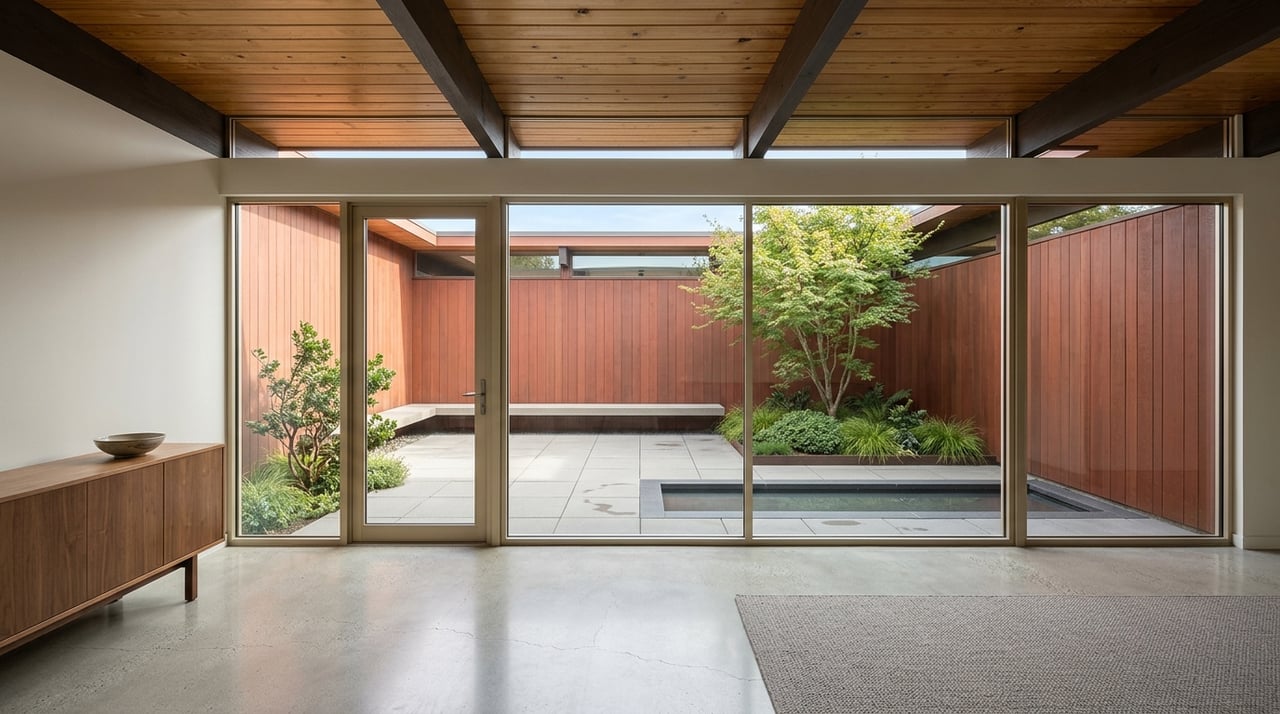
If you are drawn to clean lines, walls of glass, and that seamless indoor-outdoor feel, Cupertino’s Eichler and midcentury homes can be hard to resist. These properties offer a distinct design language, but they also come with location-specific details, preservation considerations, and renovation questions that matter before you buy or sell. This guide will help you understand where to look, what defines these homes, and what to evaluate in Cupertino’s fast-moving market. Let’s dive in.
Why Eichler Homes Stand Out
Cupertino’s older neighborhoods grew out of postwar suburban expansion, with parts of the city remaining largely ranches and estate vineyards until the mid-1960s. That history helps explain why certain pockets still feel architecturally different from newer or heavily remodeled areas. In today’s market, those differences can carry real weight.
As of March 2026, Redfin reported a median sale price in Cupertino of $3.359 million and a median of 9 days on market, while Realtor.com described Cupertino as a seller’s market. In a competitive environment like this, homes with a recognizable architectural identity often attract focused interest from buyers who value design as much as square footage.
Where to Find Cupertino Eichlers
Fairgrove Is The Main Eichler Pocket
If you are specifically looking for authentic Cupertino Eichler homes, Fairgrove is the key neighborhood to know. According to Cupertino’s General Plan, Fairgrove sits in southeastern Cupertino and is bounded by Phil Lane, Tantau Avenue, Bollinger Road, and Miller Avenue. It contains about 220 Eichler homes built in the early 1960s.
This area is also distinct because it is zoned R1e-Eichler Single Family. The city identifies it as the small area where the predominant architectural style is Eichler, and it continues to encourage use of the Eichler Design Handbook Guidelines to help preserve the neighborhood’s character.
Rancho Rinconada Offers Broader Midcentury Stock
Rancho Rinconada is another important area if you like older homes, but it is not the same as Fairgrove. The city describes it as a southeastern neighborhood bounded by Stevens Creek Boulevard, Tantau Avenue, Lawrence Expressway, Bollinger Road, and the Fairgrove neighborhood.
Originally developed in the late 1940s and early 1950s, Rancho Rinconada includes a mix of original homes, remodels, and replacements. That makes it a useful area for buyers interested in midcentury-era housing, but not a dedicated Eichler district.
Monta Vista Adds Historical Context
Monta Vista matters because it helps tell the story of Cupertino’s older residential development. The city notes that the electric railway helped develop Monta Vista, which it describes as Cupertino’s first housing tract.
For buyers and sellers, the main takeaway is simple. Monta Vista is part of Cupertino’s older housing identity, while Fairgrove is the city-designated Eichler pocket.
What Defines An Eichler Home
Cupertino’s Eichler Handbook describes these homes as modernist designs built from the late 1940s through the late 1970s. Common features include open floor plans, glazed atriums, radiant-heat floors, slab foundations, low-pitched or flat roofs, extensive glass, and a strong focus on indoor-outdoor living.
The overall shape of the house is also part of the style. The handbook identifies common geometric layouts such as rectangular, C-shaped, H-shaped, and L-shaped plans. These are not just visual details. They affect how the home handles light, privacy, and the connection between interior spaces and outdoor areas.
Another signature trait is the relationship between the house and the street. Eichlers often have open front yards, simple geometric landscaping, and relatively little glass exposure toward the street. That can create a home that feels open and bright inside while still offering privacy from the curb.
How Midcentury Homes Differ From Eichlers
Not every older modern home in Cupertino is an Eichler. That distinction matters, especially if you are comparing homes across neighborhoods or evaluating resale value and renovation strategy.
An Eichler usually refers to a home with a very specific architectural vocabulary tied to Joseph Eichler’s modernist approach. A broader midcentury home may share some era-based features, such as single-story living or original postwar construction, but it may not include hallmark elements like an atrium, dramatic glass walls, slab-based radiant heat, or the same roof and beam design language.
In Cupertino, that means you should be careful about labels. Fairgrove is the clearest place to find a concentrated Eichler tract, while other neighborhoods may offer midcentury homes without being Eichler neighborhoods.
What Buyers Should Evaluate First
If you are considering a Cupertino Eichler, style is only part of the decision. These homes can be wonderful to live in, but they often reward buyers who look closely at systems, condition, and the quality of past updates.
Here are a few of the first things to review:
- Roof design and condition
- Glazing and large glass areas
- Radiant heating system
- Slab foundation considerations
- Whether prior remodels respected original proportions and design
These priorities come directly from the home’s core construction and design features. In particular, radiant heat can require more specialized attention because it is integrated into the original slab-based design rather than operating like a typical forced-air system.
Renovating Without Losing Character
One of the biggest questions in Cupertino’s Eichler neighborhoods is how to modernize a home without stripping away what makes it special. In many cases, the strongest results come from keeping the core architectural elements intact while improving function, comfort, and systems.
That often means preserving the roofline, beam rhythm, atrium or courtyard feel, and the overall proportions of the glass and walls. A renovation does not have to freeze the home in time, but it should respect the design logic that gives the house its identity.
What The City Encourages
Cupertino’s Eichler Handbook favors flat or low-pitched roofs, large ungridded glass, simple vertical siding, square beams, muted earth tones, geometric lighting, and open front yards. These guidelines are voluntary in Fairgrove, but R1 and R1e development rules still apply to new construction, additions, and remodels.
For homeowners, this means updates should be approached with care. Even when your goals are practical, such as adding space or improving comfort, design choices can affect how well the finished product fits the neighborhood and the original home.
Second-Story Additions Need Care
A second-story addition may be possible, but the city treats it as a design challenge in Eichler neighborhoods. Setbacks, massing, and privacy all need careful attention.
If you are evaluating a home for expansion potential, this is one of the most important early conversations to have. A lot line and square footage opportunity do not automatically translate into a simple add-on.
What Sellers Should Know
If you own an Eichler or another midcentury home in Cupertino, your preparation strategy matters. Buyers for these homes often respond strongly to design integrity, condition, and clarity around improvements.
That means good preparation is not just about making the home look polished. It is also about helping buyers understand what has been maintained, what has been updated, and how the house has been cared for over time.
A thoughtful selling approach often includes:
- Organizing clear property disclosures
- Documenting major system updates when available
- Highlighting architectural features that define the home
- Distinguishing original character from later changes
- Preparing the home in a way that supports its design rather than covering it up
In a market like Cupertino, details can shape both buyer confidence and offer strength. For architecturally distinct homes, that is especially true.
Why Local Context Matters In Cupertino
Cupertino’s Eichler and midcentury homes do not exist in a vacuum. They sit inside a broader market shaped by limited inventory, strong demand, and buyers who are often balancing architecture, location, commute patterns, and future plans.
That is why neighborhood-level context is so important. A buyer looking in Fairgrove may be specifically seeking an Eichler experience, while a buyer in Rancho Rinconada may be more open to a wider range of midcentury homes, remodel opportunities, and replacement-home streetscapes.
For sellers, that same local context affects positioning. An authentic Eichler in Fairgrove should usually be framed differently from a general midcentury-era home in a neighborhood with more varied housing stock.
A Smart Approach To Eichler Buying And Selling
Whether you are buying your first Eichler or preparing to sell a long-held midcentury home, the best outcomes usually come from clarity and preparation. You want to understand the neighborhood, verify the home’s architectural and mechanical realities, and make decisions that support long-term value.
In Cupertino, that can mean the difference between simply owning an older home and truly understanding what makes a property special. If you want help evaluating a Cupertino Eichler, planning the right pre-sale strategy, or understanding how a home fits into today’s market, Lynn North offers the kind of hands-on, detail-focused guidance that can make the process clearer from start to finish.
FAQs
Where are most Eichler homes in Cupertino?
- Fairgrove is the city-designated Eichler district, with about 220 Eichler homes built in the early 1960s.
Are all midcentury homes in Cupertino Eichlers?
- No. Some neighborhoods have midcentury-era homes, but Fairgrove is the clearest Eichler enclave, while places like Rancho Rinconada include a broader mix of older homes, remodels, and replacements.
What features define a Cupertino Eichler home?
- Common features include open floor plans, glazed atriums, radiant-heat floors, slab foundations, low-pitched or flat roofs, extensive glass, and strong indoor-outdoor living design.
Can you add a second story to a Cupertino Eichler?
- Possibly, but the city treats second-story additions in Eichler neighborhoods as a design challenge and expects careful treatment of massing, setbacks, and privacy.
What should buyers inspect first in a Cupertino Eichler?
- Buyers should pay close attention to the roof, large glass areas, radiant heat system, slab-related considerations, and whether past remodels respected the home’s original proportions and design.
Is Rancho Rinconada an Eichler neighborhood in Cupertino?
- No. Rancho Rinconada is important for midcentury buyers, but it is not a dedicated Eichler district like Fairgrove.